|
|
| |
 - Endorsed - Endorsed - Indifferent - Indifferent - Contested - Contested
|
| |
| The Nashville Statement
|
| |
|
|
| |
 Name:Daniel
Home: Winnipeg, Manitoba, Canada
About Me: I used to believe that evolution was reasonable, that homosexuality was genetic, and that people became Christians because they couldn't deal with the 'reality' that this life was all there was. I used to believe, that if there was a heaven - I could get there by being good - and I used to think I was more or less a good person. I was wrong on all counts. One day I finally had my eyes opened and I saw that I was not going to go to heaven, but that I was certainly going to suffer the wrath of God for all my sin. I saw myself as a treasonous rebel at heart - I hated God for creating me just to send me to Hell - and I was wretched beyond my own comprehension. Into this spiritual vacuum Jesus Christ came and he opened my understanding - delivering me from God's wrath into God's grace. I was "saved" as an adult, and now my life is hid in Christ. I am by no means sinless, but by God's grace I am a repenting believer - a born again Christian.
My complete profile...
|
| |
Daniel's posts are almost always pastoral and God centered. I appreciate and am challenged by them frequently. He has a great sense of humor as well.
- Marc Heinrich
His posts are either funny or challenging. He is very friendly and nice.
- Rose Cole
[He has] good posts, both the serious like this one, and the humorous like yesterday. [He is] the reason that I have restrained myself from making Canadian jokes in my posts.
- C-Train
This post contains nothing that is of any use to me. What were you thinking? Anyway, it's probably the best I've read all day.
- David Kjos
Daniel, nicely done and much more original than Frank the Turk.
- Jonathan Moorhead
There are some people who are smart, deep, or funny. There are not very many people that are all 3. Daniel is one of those people. His opinion, insight and humor have kept me coming back to his blog since I first visited earlier this year.
- Carla Rolfe
|
| |
|
email
|
|
| Was Judas one of the elect? |
Here's a hint: 70Jesus answered them, "Did I not choose you, the Twelve? And yet one of you is a devil." -John 6:70 [ESV]
Okay, some may misconstrue the hint, so I will add another: 12While I was with them, I kept them in your name, which you have given me. I have guarded them, and not one of them has been lost except the son of destruction, that the Scripture might be fulfilled. - John 17:12 [ESV]
Still confused? Perhaps this will help: 7So he asked them again, "Whom do you seek?" And they said, "Jesus of Nazareth." 8Jesus answered, "I told you that I am he. So, if you seek me, let these men go." 9This was to fulfill the word that he had spoken: "Of those whom you gave me I have lost not one." - John 18:7-9 [ESV]
I will walk you through it starting with the last verse and working backwards. Judas was not elect, we see this in John 18 where Judas leads the procession to arrest Jesus. John writes that when Christ says, "If you seek me, let these men go" it was to fulfill the word that he had spoken. "Of those whom you gave me I have lost not one." Judas was not one of the people the procession was considering arresting, and therefore he was not one of the people whom Christ was saying "let these go" about.
Since this was said to fulfill what Christ had said about not losing any whom God had given him - we should ask ourselves, "When did Christ say that?" Christ said it back in chapter 17 When He was praying, (that's the second verse I quoted) there He states that He hadn't lost one, except the son of perdition (Judas).
If we read the verse from chapter seventeen in isolation, it sort of sounds like maybe Judas was elect, but Christ could not have said what he said in John 18 if that were so. If Judas was elect Christ would have lost one whom the Father had given Him. It is evident therefore, that Judas was not given to Christ because that Judas was not one of the people that Christ was referring to when He said to those arresting Him, "let these go".
Judas was "chosen" by Christ to be one of the twelve - that was always the plan. But being called to be an apostle by Christ is not the same as being chosen by God. Clearly, the intention all along was to call a non-elect son of the devil to be amongst the elect apostles. Judas was called, as it were, but not chosen in the sense of election.
Why would God orchestrate it this way? To call someone who isn't chosen? One reason (I suppose) would be to illustrate and underscore a very profound truth about just how sinful and irredeemable sinners truly are. Judas, as a representative of all fallen men, was called by Christ personally, lived under the personal ministry of God Incarnate for years... consider that this unregenerate man was given all that could be given, short of election, to a man - and all these things could not produce a change in his fallen heart. He began as, and remained a son of the devil, and the best ministry the world has ever, or will ever see, could not change that. As Christ himself said, no one can come to the Son unless the Father drags him.
We ought to shudder at our fallenness, and shiver at the magnitude of God's bending down to redeem us.
Judas was one of the twelve, called to be a fallen apostle amongst the chosen saints - not called in the sense of election; he was not chosen by God in that sense - called nonetheless by Christ, but not chosen by God. All twelve Apostles were called to the office of Apostle, but only eleven chosen, only eleven were elect. It is as Matthew writes, many are called, but few are chosen (c.f. Matthew 20:16, 22:14).
The short answer therefore is that Judas was not elect, even though he was called as an apostle.
The lesson here is more than making an intellectual distinction between those who respond outwardly to the gospel call but inwardly are sons of the devil, and those who are genuinely elect.
The lesson is more, I say, than recognizing that, yes indeed there are tares amongst the wheat. Nor is the lesson confined to answering the simple question about whether Judas was elect. Really, that should be pretty straight forward.
The lesson for us is that all our cleverness and gifting, all our spiffy gospel presentations cannot penetrate the unconquerable heart of one of the devil's children. Listen: if Christ couldn't do it, you won't either. It is not by might (i.e. effort, skill, perseverance, etc. etc. etc.) that a child of God is made, it is by God's sovereign choice to regenerate a lost sinner.
Think it through if you are a child of God. The sooner you comprehend your utter inability to affect even the smallest spiritual change in another (and might I add, even in yourself) - the sooner you will begin to throw yourself upon Christ for all your spiritual endeavors. Without Christ you can do nothing. It isn't that you will be weak, it is that you will be entirely incapable.
We must learn, and relearn this lesson. Chew on it daily, even after it becomes clear to us - we must continue to learn from men like Judas - not only the difference between being chosen to do play a role here on earth, and being the elect of God, but more specifically, the lesson that no amount of teaching - even perfect teaching can penetrate a heart that God hasn't chosen.
We remind ourselves of these truths, not to encourage ourselves in a defeatist attitude: If I can do nothing, why should I try?. Instead, we remind ourselves of these truths to encourage us to rely utterly and entirely on God for all things. If it is true that we cannot do anything without Christ - that only God can affect spiritual change - that means we must do all in God's strength and not our own.
If in God's strength, then we needn't feel impotent in our ministry - we should rather feel joy, confidence, and assurance because God works even when we feel like a deflated balloon (and perhaps especially so).
When I encourage you not look to yourself for strength, I mean that you shouldn't be waiting for the springtime of your joy to cast seed on the ground - you should be ready in season and out.
Perhaps that is too poetic? Let me try it plainly, I mean don't wait for the perfect day of Christian purity and divine fellowship before you are willing to trust that God is working.
God is not sitting in heaven waiting for you to have a perfect day so that He can minister through you on that day only. Do you think the person who led you to the Lord was having a perfect day on the day you were saved? Get real. If our strength is in the Lord and not ourselves, then we must act on that truth, and not wait for strength from within to empower our ministry. You have been given some currency - don't bury it in the ground while waiting for the perfect day to invest it - use it now.Labels: encouragement, Unconditional Election |
posted by Daniel @
6:15 AM
2 comment(s)
 
|
|
|
|
| Implications |
I apologize up front for the length...
Isaiah 55:11 says, "11So will My word be which goes forth from My mouth; It will not return to Me empty, Without accomplishing what I desire, and without succeeding in the matter for which I sent it. " [NASB]
We often skip the context when we use that verse to make a point, so in order to avoid that, let us examine the immediate context - just so that we don't make that mistake.
Of particular note is the Messianic reference in verses four and five, "4Behold, I have made him a witness to the peoples, a leader and commander for the peoples. 5Behold, you will call a nation you do not know, and a nation which knows you not will run to you, because of the LORD your God, even the Holy One of Israel; for He has glorified you." [NASB]
The "you" of verse five is referrencing the Messiah (referred to as "David" in verse three). Isaiah is proclaiming God's announcement that His Christ will call to Himself "a nation you (Israel) do not know" - a reference to the Gentiles. Christ will call the Gentiles, and He will do so because "He (God the Father) has glorified you (Christ)". I don't think that is particularly fuzzy or obscure, and so I am not going to belabor the point.
In the next verses God proclaims through Isaiah the message that is going to be preached to this "nation Israel does not know": 6Seek the LORD while He may be found; call upon Him while He is near. 7Let the wicked forsake his way and the unrighteous man his thoughts; and let him return to the LORD, and He will have compassion on him, and to our God, for He will abundantly pardon." [NASB] - which we may note is exactly what Paul says He preached as "the gospel" (c.f. Acts 20:18a, 20-21, "18And when they had come to him, he said to them, "You yourselves know, ... 20how I did not shrink from declaring to you anything that was profitable, and teaching you publicly and from house to house, 21solemnly testifying to both Jews and Greeks of repentance toward God and faith in our Lord Jesus Christ. "
I highlighted the words faith and repentance because that is what God was proclaiming (through Isaiah) the Messiah would preach to the Gentiles, and that is exactly what Christ did, through the Apostles after His resurrection. Paul testifies through Luke (Acts) that this is what he was preaching.
We find verse eleven of Isaiah therefore, following a short "apology" (in the theological sense and not in the "I am sorry" sense) for this proclamation - where God basically says, through verses 8, 9, and 10 - that God's ways are not our ways, and that what He proclaims He will may not line up with the thoughts of the Jews - but God says here that His thoughts are far above their thoughts...
That is where verse eleven comes in - God declares that what He has said (about the Messiah calling the Gentiles) will absolutely come to pass - that this declaration shall not be empty, but that God will absolutely bring to pass the thing He has declared to do.
We shouldn't have a lot of difficulty, I think, in seeing that, or believing it. God is basically saying - look, I am going do this thing. I am going to make an everlasting covenant with my Messiah, and He is going to call the Gentiles - and regardless of what you think - I shall make it happen, for I am not speaking in emptiness - I shall make this happen.
I suppose I could repeat that ten ways, but you get the picture.
That is, I think what the verse is specifically teaching.
Yet there is more here than just the specific teaching - there is inherent in this proclamation, something instructional about God's character. That is, while the verse -does- have a specific meaning, it also reveals something of God's nature.
If someone were to ask us, "Does God ever fail to follow through on His word?" we may quote Isaiah 55:11 - but only if we are applying to what the text says about God's character.
I have seen people quote (and I myself have done this -- even on this blog) the text of Isaiah 55:11 text as a biblical proof text for the idea that every time scripture ("God's word") is employed (no matter by who, or for what purpose) it always produces some spiritual effect, -because- "God's word" does not return to Him void, but is successful in accomplishing whatever God sends it out to do.
You see, that is a very poor application of this verse.
It may well be that whenever scripture is employed God does something spiritual - but this verse doesn't "prove" that. All it "proves" is that what God said about the Messiah, would come to pass - and it did.
Yet, as I began to allude, this verse does reveal something of God's character - it shows that God accomplishes everything that He sets out to do. Although the point is obvious from this verse alone, the point does not stand in isolation. We see this truth portrayed throughout the whole of scripture in many places and many ways. Yet, the purpose of this post is not so much to expound on the text of Isaiah 55:11, so much as to examine the implications of what this text teaches us about the Character of God.
Would you agree dear reader, that God does not, and will not fail to do everything He sets out to do?
I think a lot of people are willing to go on record to say that God is sovereign - as long as they qualify what sovereignty means. It means (according to these) that God really does have control over everything -- except who goes to heaven.
Expressing that more carefully: it means that while God brings His will to pass in every other aspect of creation, when it comes to mankind, God's will is thwarted by mankind's free will. God's sovereignty (according to this schema) is now regarded as nothing more than his "right to rule" - God is sovereign, but only in the sense that He is the rightful Authority, that is, the reason we ought to obey God is because He is positionally sovereign over us.
Now the problem with having a fluctuating definition of sovereignty is that scripture never paints God's accomplishing His will as something that sometimes works and sometimes fails. God, in the witness of scripture - does - not - fail. I would even boldly submit, scripture shows that God cannot fail.
If we deny God's sovereignty in election, that is, if we say that God doesn't choose whom He will have mercy on, but rather leaves that up in the air - casting out a general invitation, and hoping that someone will answer it - we can paint over what is going on in the hues of sovereign sounding language, but even should we paint a photo-realistic horse on the side of an elephant, and even if in the right light we might only see a "horse" - we are still looking at an elephant.
Which is to say, that we can pay great lip service to the idea that God is sovereign - saying with unfeigned, pious humility that God sovereignly "chooses" to let man make the determining choice in His own election - but the moment we strip God of having any determining influence in the process - we actually are stripping God of real sovereignty.
This is where we make that theological choice that tells us something about our estimation of God's nature.
Peter tells us (in 2 Peter 3:9) that The Lord is patient toward us - not wishing for any to perish but for all to come to repentance. Likewise Paul says in his first letter to Timothy that God our Savior desires all men to be saved and to come to the knowledge of the truth (c.f. 1 Timothy 2:3-4). This sentiment cannot be thought of as some new testament change in God's character, for we read even in Ezekiel 18:23,32 that God takes no pleasure in the death of the wicked and would rather that the wicked would turn from his ways (repent) and live. We also see Paul expressing to Timothy and Titus something of God's nature when he writes that the living God is the Savior of all men, especially of believers (1 Timothy 4:10) and that the grace of God has appeared, bringing salvation to all men (Titus 2:11).
The picture we are painted by these (cherry picked) verses is that God is desperately trying to save everyone.
Now, without going into the exegesis for each verse - for people from both sides of this equation will have plenty of "proof" that the "only" right way to understand these verses is according to their theological conclusions - such that the text can "only mean" as much as supports their preconceived opinion.
We want, I say, to avoid that because it's been done, and frankly, people tend to come away from such "debates" - not softened in any way, but rather sharpened in their continuing ability to defend the position they have already, with longstanding fervor, dug their heels into, and while I hold very strong opinions in this regard, and while I am certain that my handling of these texts not only conforms to the conclusions I draw from them, but is the least injurious way to receive these texts - yet I will not here defend my understanding of them, and instead I ask what if anything these texts imply about God's nature.
Most of us can agree that God loves everyone. He lets the rain fall on the just and the unjust; that is, He lovingly provides sustenance (rain is needed for crops) for all men equally. Christ Himself demonstrated so much love for Judas Iscariot that when Christ proclaimed at the last supper that one of them would betray Him, no one suspected Judas. I mean, we can, for the most part, understand that God is not partial when it comes to provision and love. God loves His enemies, we are told, such if one wanted to argue that God didn't love the non-elect - it would be a pretty strained argument.
So we accept that even if scripture says that God loved Jacob, but not Esau - it cannot mean that this same God who loves even His enemies, had no such love for Esau; for God multiplied Esau and blessed him greatly. That is, we don't want to take a text like that and by it imply that God doesn't love everyone. If anything such a text shows us that God does not apply the same blessings to all unilaterally. Israel received the blessings according to God's promise, and Esau did not - though both were sons of Isaac. Isaac received the blessing and not Ishmael - though both likewise were son's of Abraham. We see in this text - at the very minimum - that there was a relationship between God's promise and God's blessing - and that this promise was not according to birthright, or anything that Ishmael or Esau did or did not do - but was in accord with God's purpose - a purpose that was in place before either of these were born.
That is, though the language of "love" is used here in scripture, we recognize that if God loves even his enemies, that what is being described here by the word "love" is referring to something that is not universal, but is according to God's purpose which He promised to fulfill.
I don't want to go off on too many tangents here - especially given that as I do so I give more opportunity for those people who disagree with some finer point to needle me in the meta about it rather than discuss the main point - yet I think I have not added too much or left out too little to begin a brief examination.
So getting back to the idea that we have to make a theological determination, based upon our understanding of God's nature, in order to handle verses that seem contrary - we must answer the question of whether or not a sovereign God can (or will) fail to make His will happen.
You see, if I presume that God -is- trying to save everyone in the world, I must deal with the implications of my presumption, not the least of which is that God -can- fail.
You have heard it said that a chain is only as strong as its weakest link. That is, if a man has only ever raped a child once - the chances are you are -not- going to let him babysit your little ones. That single act of violence marks the man as one who is not merely "theoretically" capable of something heinous - but as one who has demonstrated both the desire, and the capacity to carry out such a thing. The child rapist has lost forever the 'benefit of the doubt' as it were, when it comes to babysitting children. We reason that if he could do it once, he could do it again - and whether or not he does is not the issue with most parents - but that we dare not provide an opportunity him to give into that temptation.
The child rapist may live an exemplary life - a life of profound ethical and moral "regeneration" - yet all his piety, good works, and "niceness" - whether or not the man is trustworthy with a dollar, a job, or some other responsibility - yet when by this one single act of perversion - the man forever removes any hope of being trusted on that account again. It doesn't matter how strong the other links are in the chain of this man's character - the one link that is broken suffices to eliminate him from as a prospective baby-sitter.
Now, if the man had once driven three miles over the speed limit, we could care less, because we tend to reason from a state of relative morality: raping a child does far real-world "damage" than driving three miles over the speed limit. We all have been trained that evil is measured according to how disruptive it is. The more disruptive - the more evil. Stealing a pencil from work? Pffft. So what? Yeah, it's wrong, but hardly comparable to say, stealing a car. Who is inconvenienced by a stolen pencil?
You see, we do that - we reason that the greater the inconvenience, the more heinous the crime. It is a totally selfish way of looking at it. That is why when we hear that a tidal wave has killed so many people in some third world country, we look up from our meal and say - "oh" then go back to eating - but if a child falls into a sewer on our street and drowns, we are there with our own dollars to patch the sewer so it doesn't happen again. Our self-interest, the very personification of sin, drives us to deal with those things that either directly inconvenience us, or potentially might inconvenience us. It is this same thing that we use to determine who bad a thing is.
That is why we do not weep bitter tears at night over our having rolled through a stop sign. We are concerned with sin only in so much as we regard our offense to be "big". We weep that we are bad spouses, or that we yell at our children - but who cares that we take an extra five minutes on our lunch break?
This "relative perspective" on sin is what keeps most of us spiritually immature, for we stop seeing sin in our selves the moment we "clean up" enough to pass church muster. We don't think our "little" sins are worth concerning ourselves over, and so we get comfortable with the "little foxes that spoil the vine".
I digress however.
The point is that if we understood sin right, we would see that the smallest infraction is just as sinful as the biggest - for it demonstrates a truth about us - we are spiritually unfit to stand in God's presence. We don't need to do some "big" sin to become unfit - rather that we sin at all demonstrates something about us - that (as I said) we are unfit; that we are sinners.
Likewise, (arguing from the lesser to the greater here), if God can fail "at all" - it tells us something about God's nature.
Do you feel the weight of that? If God can fail in anything, it tells us something about God.
Now - as I have said, this is where we make theological presumptions. My presumption is that God cannot fail. I base that presumption upon the nature of God that I find in scripture - a nature that is revealed in verses like Isaiah 55:11 - where I see God proclaiming that His plan shall certainly come to pass. I see in such a declaration that God is not impotent, not sitting on a fence, not indifferent - God is active, God is bringing about His purpose. I see this all throughout scripture, and the verses that tell me that God loves everyone cannot mean - if God really is sovereign - that God has his hands off of the process. Nor can it mean that God is trying to save everyone, and failing to do so.
What it must mean - given my stated "presumption" - and by presumption, I remind the reader that I mean, given what I see of God's nature in scripture and applying in unilaterally, what I see is that when scripture states that God loves everyone, or that God takes no joy in condemning sinners, or that God wants everyone to repent - it is not suggesting that God is impotent and unable to make these things happen, but rather that God has determined to allow things that in and of themselves do not bring Him pleasure.
Consider the "spiritual" death of sinners. God takes no pleasure in that. It doesn't matter if that "spiritual" death happens in hell or in Christ on Calvary - it happens to -all- of us, and the displeasure that God takes in it is universal. It isn't like God hates sending sinners to hell, but loves letting believers get away "Scott-free" Believers to not get away "Scott-free" we get the same deal as the non-believers, a fullness of God's wrath poured out on us - but that wrath is received -in Christ-. It is not as if it vaporizes for believers, and sticks around for unbelievers - good gravy no. The same wrath is poured out on all sinners. The only difference is whether or not one passes through that wrath in Christ or not.
Likewise consider that God loves even His enemies. Can we find one person who is was not born God's enemy? It wasn't God's love that called us - for scripture says that we are called according to His purpose.
I know that many in my camp like to argue that God has a "special" love for his own - and I leave them to argue that. Likewise many stand on the grammar and linguistics of various texts to demonstrate that "all" means only some, etc. and I leave them to argue that too. Even if all is always universally inclusive - we find that we are either following a God who is a failure, or a God who never fails. How we regard God in this will leech into all our theology.
I ask you therefore reader, to consider whether or not God can fail. If you say that God cannot, then does your theology line up with that, or are you just painting a horse on an elephant?Labels: Theology, Unconditional Election |
|
posted by Daniel @
9:32 AM
14 comment(s)
|
|
|
|
| Elect Individuals, Not Nations. |
Jeremiah 29:11 says, "For I know the plans I have for you, declares the LORD, plans for peace and not for evil, to give you a future and a hope."
I often hear this verse quoted as though (in the context) God were encouraging individuals that He has a plan for each one of them, and that this plan is to give them a sort of unbroken peace - one that lacks any calamity. Okay, maybe "often" isn't the right word, how about, "often enough". I think we see this in some of the more tacky gospel presentations, "God has a plan for your life..." etc.
The original context is a letter that God instructs Jeremiah to write to those Israelites who were presently (after having refused to repent for generations) living in the very exile that God had promised Moses would come to those Israelites who reject Him. The purpose of that exile is more corrective than punitive - extreme measures for extreme apostasy.
The verse is best read with the surrounding verses to give it immediate context:" "For thus says the LORD: When seventy years are completed for Babylon, I will visit you, and I will fulfill to you my promise and bring you back to this place. For I know the plans I have for you, declares the LORD, plans for welfare and not for evil, to give you a future and a hope. Then you will call upon me and come and pray to me, and I will hear you. You will seek me and find me, when you seek me with all your heart. I will be found by you, declares the LORD, and I will restore your fortunes and gather you from all the nations and all the places where I have driven you, declares the LORD, and I will bring you back to the place from which I sent you into exile." - [ESV (verses 10-14)]
The comfort that is offered here is first and foremost a comfort in the midst of correction - that is, even as Israel is receiving the fruit of its apostasy, God encourages the whole nation to consider the nature of their exile; That they pray that God would return them to their own lands till the cows came home but God was telling them he will not hear those prayers until after seventy years have passed. You see, Israel was instructed by God to give even their land a sabbath rest - that is, to allow the land to be fallow one year in seven, but this had been corporately ignored by Israel, and so for each year that Israel ignored the Sabbath year, one year was added to their exile.
Of note is the encouragement however that God, in correcting their behavior, was by no means abandoning them. God's encouragement was that in spite of this correction, He had real plans for Israel (speaking of, I believe, the Messianic age), plans of peace between himself and Israel, plans to be reconciled to them so that there would be no more correctional calamity as they were presently experiencing.
I could go deeper into it of course, but this is rather mentioned here as an instructional counter point to the point I was going to make. You see, some people take this one verse out of this context and they apply it to themselves as if God was promising that he was going to bless them personally in accord with some plan for their personal lives - and this without qualification. That is, they take a promise given to an entire nation, a promise that in essence is given to say I am still here with you throughout this correction - and they presume that it can be rightly applied to themselves out of that context and without qualification - for no other reason than because it is compelling and encouraging to think that God has unqualified plans for our peace and happiness, and more likely, because this is how the verse is often used - to placate doubt, to pacify during calamity, and perhaps especially to encourage individuals to personalize God's love for them.
Now, God -does- love the individual, we see that expression most clearly in Christ's dying for each elect individual -- but this verse isn't speaking about individuals, it is speaking about a whole nation - and God's plan for that nation. When we interpret this verse in such a way as to suggest it is speaking about individuals, we do a "hack job" in our exegesis.
That is, to say, while it is true that God loves each elect believer, and that scripture teaches that God has a purpose for each of us, and has set apart very specific good works for each elect individual to walk in - and that God's sovereignty in our lives is so profound that even the number of hairs on each one of our heads is determined beforehand by God, such that no hair falls out unless God has decreed to allow it - that is, we do not make this objection because we want to suggest that God's involvement in the lives of His children is distant or a matter of corporate (only) involvement - rather we simply want to use the right verses to make our points, and this verse, while putting on display God's sovereignty in that He really did have a plan for Israel, and that it is an encouragement to us in the here and how that God brought that plan about exactly as He said He would, yet we must not take a verse out of context to make it say something just because we are making it say something that is pretty much true anyway.
Yet all of this is not my point. I only, as I said, mention it because I want to have something to balance out the point I am pressing to make. Here we see that it is wrong to apply something to an individual that is (in context) directed towards a nation.
The same is true of verses that speak of individuals - it is wrong to apply them to nations.
I am referring now to Paul's exegesis of Malachi 1:2 (" 'I have loved you,' says the LORD. But you say, 'How have you loved us?' 'Is not Esau Jacob’s brother?' declares the LORD. 'Yet I have loved Jacob' " - [ESV]). Paul refers to this in the night chapter of his letter to the Romans, ("As it is written, 'Jacob I loved, but Esau I hated.' " - Romans 9:13 [ESV]).
You see, some (very few actually), object to what Paul is teaching here - that is, they object to the notion that God elects individuals, and because Paul uses individuals in his example, they interpret these individuals as representative of nations - thereby allowing them to avoid the implications of what Paul is teaching - and this is -usually- done because unknown to them, they have come to the text with a presupposition about God's character - that is, they presume that it would be quite unfair for God to elect only certain individuals, and so they are often fortified in their opinions because they are not just defending their take on the text, but they are defending their presumptuous speculations about God's character.
The trouble with such presumptions, apart from being vacuous, is that they are entirely uncalled for, since there is nothing offensive or unjust about the alternative, but contrary understanding of God's character; that is, they impose a secular ethic upon God, and because the secular ethic seems right to them, they presume that God must be the origin of that ethic, when in fact God is not.
I am speaking of course to the notion of fairness.
If three men come to my house and build a deck for me in my back yard, it would be "just" for me to pay them their wage, in fact we call it a wage because it is something they earn - that is, they are so entitled to it that to keep it from them would be unjust.
If I were to go out into the street and choose three people according to my own purpose - whatever that was doesn't matter - and chose to give these three "wages" they hadn't earned - it would be an act of grace towards those three people.
The problems come when someone doesn't get this grace and imagines that because they (like the three) haven't earned this grace - that they should therefore be entitled to it.
Do you see the works mentality here? They have it in their head, though they don't realize this is how they are reasoning, but they have it in their head that those who receive this grace by doing nothing have, never the less, "earned it" by doing nothing - such that everyone else who does nothing likewise "earns" this grace, ending in the opinion that if grace is given to one who is undeserving, it places the giver of grace under an obligation to provide the same grace to everyone since they have all equally "earned" it by doing nothing.
That is, if I have four children (who have equally done nothing to deserve any special favor) I cannot give any one, two, or three of them a gift of grace, because in failing to give that gift to all, I am somehow putting the ones who don't receive it out.
Do you see the heart of that? It reasons from the one who doesn't receive grace, and it reasons in this way - I deserve the free gift because someone else got it who didn't deserve it. It should have been me!
The reality is that we do not deserve a blessing just because someone else receives one - no matter how undeserving they are. It is only a twisted, broken, sinful heart that can look upon grace and demand it as though it were something owed to them.
Thus, if I were to award one of my children with some grace, it is by no means "unjust" or "unfair" to the others - the only reason we would imagine this is an unjust or unfair act is because we are selfish by predisposition, and know how rotten we would have felt if one of our siblings received something they didn't deserve and we didn't - we would feel unloved, unwanted, or perhaps just less valuable. None of these would be true of course, for the only reason we feel that way in the first place is because we start off with the belief that [1] failure to give us whatever we want is an act of hatred, and [2] there is nothing wrong with our wanting something that others have.
I am laboring the point of course, to show that it is avarice (coveting) and not justice that is at work in us - and we are so entirely corrupt in our thinking that we even feel empathy for others whose avarice goes unsatisfied. So it seems quite just for us to give the same to all - just because we know what it is like to rouse our own covetousness, and do not wish to give rise to the same in our own children, or to anyone else for that matter.
But the root of it all is not justice, but sin. Not fairness, but coveting, and we impose this rule upon God's character. God would certainly never, ever do anything "unfair" - and we reason therefore that God would -never- elect an individual to salvation, since that would mean that there would be individuals whom God does not elect to salvation - and that would make God "unfair" - at least according to our own tainted-by-avarice sense of justice.
When we impose our own fallen sense of justice upon God's character, it may well force us to conclude that God cannot (regardless of what the scriptures say) elect individuals - we are driven to say that God makes it a level playing field for all, and that election is not God choosing one individual over another, so that when we read God doing exactly that - we inject into the text the idea that God was choosing one nation (Israel) over another (Esau), and we do that, not because the text warrants it, for the text is clearly speaking about individuals - surely there are Edomites who are saved, and there are Israelites who are not saved, so the whole idea of nations, even if that is what the text -did- mean, would be pointless - but they make this assumption in spite of the fact that individuals are being discussed because they come to the text having rejected beforehand the notion that God elects one individual over another.
I mention this to illustrate the dangers of a blind spot.
You see, we (who love God) all do our best to give God the benefit of the doubt in any area that we are unsure about. God is good, perfectly just, all powerful, omnipresent, and omniscient. We can assume a lot given just those attributes, and frankly we do. But even one wrong assumption about God's character or power - one well intentioned, but slightly wrong assumption about God's moral character, instructed not out of scripture, but rather presumed based upon our own corrupt sense of what is right - even the smallest error here, can have profound theological repercussions.
What do you get when you have a sincere Christian who believes the entire bible is true, and is attempting to live out that truth, defend it, and especially to understand it in a way that is free from contradiction and error - yet has presumed some small thing about God's character that doesn't come from scripture, but from the well of their own depravity?
You get heresy, theological error, pride, and blindness.
The point is that we who are His children, are supposed to be ministering to one another for the building up of the body - in truth. That is, we are to be contending for, and seeking out the truth, ready to set aside any falsehood that God illumines in us, and to embrace the truth wherever it is found.
I for one do not find the election of nations in Romans 9:13, and I believe that those who see the election of nations in this text see nations because their presuppositions demand that they do. One could turn that argument around and say, "Daniel, I believe you fail to see nations here because you bring the idea of individual election to the text with you, and because you are expecting to find it there, you do." To these I would agree that there is always that danger, but I have in my favor, the fact that the individual who wrote this account was accosted by God on the road to Damascus, and that those who were with him did not hear the conversation that took place between himself and the Lord - that Christ did not come to them (zealous Jews though they were), but to Paul personally. They were all from the same nation (Israel), but only Paul was singled out; it is this man who writes not of nations, but of two individuals - brothers, twins even - and teaches that election is not based upon individual merit, for both Jacob and Esau were without merit - they were equal by all worldly accounts, same parents, same family, twins in fact - neither had done good or bad, that is, there was no merit in either individual - and yet Jacob was chosen and Esau was not, and that choice took place before either had opportunity to influence it.
The choice of an individual is not random or arbitrary, but as Paul teaches, it is in accord with God's purpose. Individual Jews certainly benefited from the promises given to Israel regarding their coming Messiah - but those promises which God kept to the nation He by no means kept on an individual level - since not everyone who is a child of Israel is a child of the promise.
God didn't look down the corridors of time, to see who was going to choose him, and based upon their choice, made his election of them. Nor did God look down the corridors of time and do the same for nations.
The doctrine of individual election is perhaps the most Christian doctrine there is, and for that reason it is also the most attacked, and most hated. We who are fallen in our nature cannot accept that God chose us for His own purpose - our nature demands that the choice be based upon some virtue within us - either we made the right choice, or we did something, however infinitesimally minuscule on our part - yet the reason we will go to heaven is not because God chose us, but because we chose Him - that way God can send people to hell with our blessing, because they didn't choose God.
The trouble with that thinking is that we are sending people to heaven because they choose God, and sending people to hell because they don't choose God; said on a more generic level - people don't go to hell because they sin, they go to hell because they didn't make the right choice, they are condemned not for their sin, so much as their failure to make the right decision.
The bible teaches that everyone, from the first act of rebellion, deserves hell, and that in spite of their deserving hell, God chose some to redeem. These didn't deserve it, they didn't earn it, and God's choice was not based upon something good in them that was lacking in others - including just the good sense to "pick God". They choose God ---because--- they become born again, and not ---in order to--- become born again. God is by no means required to elect anyone, and His electing some by no means obligates Him to elect all.
If our theology turns election into bloatware - that is, if our theology turns election into a great big effort that ultimately does absolutely nothing - so that we say, God elected "Israel" and therefore anyone who joins himself to Israel will be counted as teh elect - what we are doing is creating a theology that makes election a self-applied label. We may has well call the elect "the green team" or something equally as pointless, because we turn election into God declaring that He will eventually have a team called the elect - but that other than giving a name to it, and declaring that He will have such a team, He otherwise steps back and has nothing to do with making it happen. It paints God as an all powerful, but intentionally impotent fortune teller.
Nicodemus was no idiot. When Christ (in John Chapter three) said that a man had to be born from above, Nicodemus wasn't all confused and shaken - as if he had no idea that Christ was using a metaphor; rather Nicodemus asks his question again, this time in the flavor of Christ's metaphor: Can a man crawl into his mother's womb and be born again?? That is, Nicodemus was extending the metaphor to ask the same question again - what must I do to be saved? Be born again? okay, what must I do to be born again? How do I crawl into the womb again - what do I do to make it happen? The answer is stunningly perfect - just as you could not make yourself be born the first time, neither can you generate it in your own will the second time. It is God who wills it to happen, just as He did for your first birth. The Spirit does what he does, and although you can witness what God has done, you have no more control over it than you have control over the wind.
The question we ought to ask is not why God does not elect everyone, rather we marvel instead that God elects anyone.
A quick parting note: If I believe that ultimately a person's salvation is dependent upon their own decision - then my job in presenting the gospel is to persuade people into heaven. Those who reject the gospel I present may well have received it had someone with more knowledge and persuasive ability presented it - likewise, if I "botch" the presentation such that this person sours towards Christianity and therefore never again is willing to hear the gospel, then more than simply saying nothing - my presentation has driven that person to hell. I think the idea that people's eternal destiny rests upon my ability to make the gospel attractive is the exact same gospel the rest of the world religions teach.
If on the other hand, God's sovereignty is genuine, and not in "label form" only - if God really has elected some individuals, and the point of my sharing the gospel is not to try to "save hell bound sinners ", but rather to walk in the good work that God has prepared for me beforehand, both for His glory, and for my joy, then there is no pressure on me to inflate the gospel with worldly wisdom or persuasive argumentation - nor is the onus on me to succeed, but rather the onus is on God to give life where there is none - to His glory alone.
Anyway, I don't want to ramble. Bottom line, it is just as wrong to read into the text an individual application when the text calls for a corporate one, as it is to impose a corporate meaning where the examples are all individuals.Labels: Unconditional Election |
|
posted by Daniel @
9:20 AM
12 comment(s)
|
|
|
|
| Dictators and Governors. |
God is sovereign right? Right.
No matter what sort of theology you like, you will at least pay lip service to the notion that God is sovereign. We may not all agree on what sovereignty entails, but we can all agree that whatever it is, God -is- it.
Which leads me to discuss two ways that God's sovereignty might be understood. There are (no doubt) many ways that God's sovereignty could be understood, but I am only going to consider two ways, and these but briefly.
 he first way is to regard the sovereignty of God in this way - He is an omnipotent Dictator. If our understanding of God's sovereignty is thus, we regard God as making everything that happens, happen. He is sovereign in that everything that happens in all of creation does so because God directly and divinely wills it to happen in precisely the way it eventually happens. Every "action" that takes place throughout all of creation looks to God Almighty for its direct and immediate cause. Free will, in this system is an illusion, for every thought, motive, or action is actually controlled by the sovereignty of God. In other words, this understanding of sovereignty emphasizes God's control over creation. he first way is to regard the sovereignty of God in this way - He is an omnipotent Dictator. If our understanding of God's sovereignty is thus, we regard God as making everything that happens, happen. He is sovereign in that everything that happens in all of creation does so because God directly and divinely wills it to happen in precisely the way it eventually happens. Every "action" that takes place throughout all of creation looks to God Almighty for its direct and immediate cause. Free will, in this system is an illusion, for every thought, motive, or action is actually controlled by the sovereignty of God. In other words, this understanding of sovereignty emphasizes God's control over creation.
Notwithstanding, should we understand God's sovereignty as being primarily a matter of His being in direct and constant control of all that happens in creation, we should have an easy answer for questions about predestination and election. Surely we reason, if God's sovereignty is defined according to an universal automatonic presumption - that is, if God's sovereignty can be described in terms of God determining every action in creation, such that every action is caused directly by God Himself - then we need understand the doctrines of election and predestination as being the natural result of God's sovereignty - since God causes everything.
The most significant problem with that model is perhaps philosophical.
If God causes me to follow Christ, can I (by any means) take credit for being drawn thus? If my drawing was not according to my own choice or merit, but according to God's sovereignty (as defined by his controlling all things) then my election is the result of God sovereign control over me, since I can in no way resist God's will.
But if we are going to premise our election on this kind of sovereignty, we ought to be consistent, because if the sovereignty of God means that God causes all things, then every time I disobey God, it is only because God has willed that I do so, and I cannot resist God's will.
That is where the philosophy comes in.
How can I be held guilty for obeying God's sovereign decree that I disobey Him? The best answer to this philosophical conundrum is that God can do whatever He wants, because He is God after all, and that no matter how unjust it appears on the surface, we ultimately lack a sufficient moral perspective to judge God for doing it this way. I consider that particular defense on par with the playground defense of "I say it works this way, nyah, nyah!"
he other take I want to mention understands God's sovereignty in this way: That while God was certainly the first, direct cause of everything in creation, He nevertheless gave authority to Adam over the earth and over created, and in so doing allowance was made in God's sovereignty for His will to be be done indirect through man - and through providential causality. God was still perfectly sovereign, nothing in all of creation could happen unless the Lord allowed it to happen - but God unlike the first six days, where God was dictating everything that happened in all of creation, on the seventh day God rested - His sovereign control over all of creation was no longer characterized primarily by direct intervention, but now was carried out through Adam, the primary mediator between God and creation.
Only Adam fell.
We want to be fair here too. In our first scenario we were basically saying that Adam sinned as a result of God determining beforehand to impose upon Adam's will in some way so as to directly cause Adam to perform a sinful deed which was by definition, quite contrary to the perfect nature God had created Adam with. In our second scenario, we are saying that God providentially ordained that Adam would sin and when Adam did, it God was not behind him pulling the strings.
The difference is not as simple as saying "directly" for one and "indirectly/providentially" for the other - though that might seem to be all we are doing. So in all fairness we ought to distinguish with greater clarity what we are saying.
In the second scenario, God designed Adam with a built in vulnerability - he was not impervious to temptation and sin. This was not a corruption, or a design flaw, it was by perfectly in accord with God's sovereign will and his express design. Adam would fall.
We pause at this point to remind the reader that even though God created Adam as being susceptible to sin - yet God did not force Adam to sin. We might argue that it was wrong for God to make Adam this way - but that is the argument of the pot makes with the potter, "Why have you made me thus?" Setting aside the image of the pot and the potter, we reason could just as easily word it this way, "How can God hold a man accountable for doing something that God could have prevented by designing Adam to be impervious to temptation and sin?"
I hope when we state it that way, it is a little more clear. God is not to be blamed for Adam's sin, even if God designed Adam in such a way that Adam would sin. Adam was given authority on earth by God, and he used that authority (freedom) to rebel against God, and God cannot be blamed for Adam's abuse of authority just because God gave Adam the authority.
God's sovereignty in the second model therefore, is primarily described by (but not limited to) direct intervention - that is, God was the cause of all things prior to giving Adam authority over creation, and from that time on, at least with respect to the visible creation, God's sovereignty was primarily providential and indirect - all things that happened were "allowed" to happen by God, but God was sovereign in his providential rule as opposed to by directly intervening on behalf of every action in the universe.
This second model answers the question of election and predestination by saying that God calls His children to himself providentially, in exactly the same way God providentially allowed Adam to fall, that is, God ordained it before hand, and creation responded in exact accordance with that ordination, providentially. God in this model allows the authority given to Adam to run its course, but God's will is not thwarted by this corrupted authority, in fact God uses it as a potter uses clay, to bring about his will no matter what. All things, in this model, work together in bringing about God's will, in spite of the corruption. The grandest difference between the two models, I suppose is that the latter doesn't make God the direct cause of sin, but makes man and only man, responsible for sin.
The second model does not suggest that God doesn't or cannot directly intervene in a thing - but rather it doesn't require God to do so with regards to election, predestination, and sin.
The former method, I suppose, more closely resembles the doctrine known as double predestination. Double predestination simply means that God not only predestined some people to go to heaven, but he simultaneously predestines the rest to go to hell. The rational behind this, I believe boils down to a false dichotomy, but those who buy into it typically exalt God's sovereignty one notch too far.
The latter method, I suppose, would lead one to conclude that while God ordained Adam's fall (and by extension: the whole human race) yet it was not done in such a way as to make God culpable for Adam's sin, and consequently, Adam's damnation. We reason that if God created an innocent race, even if he created them prone to fall, that whatever condemnation they themselves earn is fitting - and that God would not be unjust even if created a billion universes, and in each such universe He allowed the whole of the human race therein to perish in its sin - yet God could not be held to blame for even one soul that finds itself condemned - because each one who rebels does so to the damning of their own free will, to the damning of their own soul. Given therefore that in this scenario God doesn't ordain men to hell, but rather allows men to sin, and by their sin purchase hell - in this model we have more of a single predestination - where by God saves some sinners from His own wrath which they themselves have earned by their own rebellion - yet in spite of their rebellion God elects beforehand to be merciful to some and draws them to Himself and saves them.
The former I suppose has God as more of a Dictator, directing every action, and being thereby culpable for all actions in all creation, while the latter paints God as more of a Governor who allows everything that happens to happen, and disallows everything that does not come to pass according to his own sovereign will - but has given freedom/authority to mankind over creation, such that God is no longer culpable for the decisions a man makes, although God (being sovereign) is not thwarted in achieving the purchase of the church - in spite of the fall, and in spite of sin, and rebellion, and corruption - God works in spite of all those things to save those whom He has determined to show mercy to.
Anyway, nothing terribly profound I suppose, but I was reading over at my friend Bryan's blog something about it, and thought I could comment on it here as well.Labels: Bryan's blog, predestination, Theology, Unconditional Election |
|
posted by Daniel @
11:29 AM
11 comment(s)
|
|
|
|
| Unconditional Election in John 10 - part 4 |
 If you want some context for this post, you should read the meta over at Rose's blog, or alternately, you can follow along through the series here: If you want some context for this post, you should read the meta over at Rose's blog, or alternately, you can follow along through the series here:
Part I
Part II
Part III
In conversations of this sort, inevitably someone asks the hard questions. In this case, the question is why would Christ bother giving the Pharisees a chance to repent and be saved if He knew beforehand that they weren't going to be saved. Wouldn't it be sort of disingenuous of Christ to make them an offer when He knew they would not accept it.
I probably haven't answered it as good as I could have, but here is my reply:The Pharisees were culpable for their own sin and God had declared their end from the very beginning - reserving the blackness of darkness forever for them, giving them ears that could not hear, and eyes that could not see.
To be sure, we read about where we get ears to hear and eyes to see beginning in Deuteronomy (29:4), where Moses is explaining to the Israelites that even though they all saw what happened in Egypt with their own eyes, yet in spite of that God did not give the Israelites a heart to perceive, eyes to see, or ears to hear to that very day.
That reminds us that God is the one who opens hearts and eyes, and not our own cleverness or personality - and that God doesn't do it in response to our faith, but rather our faith is in response to God's enabling. Surely there ought to have been at least a few hundred thousand amongst the roughly 2 million Jewish exiles after seeing the ten plagues, after being under the cloud day and night for forty years - that would have had enough information to have their eyes opened, if it were something that we do - so that God could "respond" - but we see that the reason their eyes and ears were not opened was because God hadn't opened them.
We see the same again in Isaiah 6:9-10 - God explains that He is going to make their heart dull, their eyes shut and their ears heavy in order to make it impossible for them to return to Him and be healed until God's appointed time. (c.f. Isaiah 32)
Jeremiah prophesies to a people whom God has made blind and deaf (Jeremiah 5:21) - recall that God told Jeremiah specifically that they would not listen to him, but he was required to call them to repentance.
Paul explains this very idea in Romans 11:7-9 - that the reason Israel failed to embrace Christ was because God had made them blind - and he quotes from similar texts to the ones I have quoted to make his point.
God made them culpable and they remained culpable even when God made them blind and deaf.
It is entirely consistent for Christ to give the Pharisees every opportunity to repent, and even as Jeremiah was instructed to preach to a people whom God had ordained before hand would not listen to his preaching - so too Christ, even though these men were not of His flock, Christ gave them every opportunity, in good faith, to repent.
Recall Christ washing the feet of Judas at a time when He already knew Judas was about to go and betray Him? That is the character of our God - a humble servant, willing to treat all men, even His own betrayer, with the same grace.
Had Christ treated those who were not of His flock differently than those who were of His flock, He would not have been God. God is not partial (c.f. Romans 2:11)
So my answer is that Christ gave them the opportunity to repent because He is God, and God is merciful. Christ knew these men were not of His flock - that is plain enough from the immediate dialog, and we could examine John 2:24-25 if we were still hazy on the idea. Christ knew these were not of His flock, but He gave them the opportunity to repent.
Now if it is a question of motive, why did He do it, I can say this much, my first inclination is to look for some motive common to man - but that has a man centered myopia to it. I like to speculate as much as the next guy, but honestly, sometimes we allow our speculations to drive our interpretation, and when we do that our speculations can cause us to re-interpret what is going on because we are unable to speculate an answer that satisfies our understanding of the character of God.
That is, I might be inclined to say - God is so loving and so merciful, that the only reason God could ever give the Pharisees an opportunity to repent was because he was wringing His hands in hope that just maybe "this time" they would believe. Such a notion is premised upon the idea that God really has no control over salvation - and that is premised upon the errant idea that God would be wicked for saving one man while allowing another to perish.
But that line of reasoning is grounded in our own sense of fairness - If I work all day and another works only one hour, and our boss pays us the same wage - I am offended because I feel that if the boss gives the other fellow the same as he give me - I should get more because I worked more. The true wicked nature of my heart is revealed in that I am offended by the kindness of my boss. I want the other fellow to get less, or alternately I want the boss to pay me more - because I don't understand justice. Maybe when I was a kid my mom used to give us all the same equally, and call that "fairness" - and maybe this is why I have this idea in my head that if the boss shows this guy who worked only an hour and gives him a merciful wage - one he did not earn, that the boss must therefore over compensate me in order to remain "fair" - and that unless this boss hands out mercy according to my understanding of "fairness" he is unjust.
But the reality is, the boss can give the days wage to whomever he wills, and it is not unjust to allow me to receive what I have earned.
Soteriologically speaking, we earn condemnation by our sin, and God is justified in paying every last one of us that wage - and God is not unjust if He, because of His great mercy, gives to some eternal life which they have not earned. It doesn't make him evil if He gives life to some and not all - it makes Him merciful. It is the mind set on a wrong kind of fairness - that cannot see this.
They were given the opportunity to repent, even though Christ knew they weren't going to. They certainly had the ability to repent - it isn't like God was forcing them to =not= repent; that image is grossly cartoonish - rather it is that repentance is a gift given by God (c.f. Acts 11:18, 2 Tim 2:25), and that God was not compelled to give them that gift. These were not innocent men - they were wretched sinners, treasonous rebels who had earned a place in hell a thousand times over through their consistent God slandering rebellion. God's only obligation to them was to give them their wage - hell. God is not wicked for "withholding" the gift of repentance - if repentance were something we had a right to, scripture wouldn't describe it as something God grants.
I may be starting to ramble - there is only so many ways to say the same thing. Let me know if my point is coherent enough to be understood.
I think that is going to be the final post in the series, but perhaps it will come up again. We shall see.
My hope is that God is glorified in this way - that someone reading this exchange will find something in it that draws them closer to the Lord. I have corrected some of my spelling mistakes, but other than that it is verbatim, though I am not always pleased to "publish" anything with rough edges, I prefer to leave it that way just to be true to that discussion.Labels: helpful, Theology, Unconditional Election |
|
posted by Daniel @
1:10 PM
4 comment(s)
|
|
|
|
| Unconditional Election in John 10 - part 3 |
 If you haven't read it already, you should read the first and second posts in this series. If you haven't read it already, you should read the first and second posts in this series.
As I mention in the previous posts, Rose posted a wonderfully edifying devotional by J. Vernon McGee, on the text of John 10:27-29, and I made some comments in the comment section about how this same text not only preaches eternal security (which was the bread and butter of McGee's devotional), but also teaches what that eternal security rests upon, that being the unconditional election of God.
I entered some comments, and some of that conversation became substantial enough that I thought I ought to post it here, if for no other reason because it would be easier for me to find if I post it here.
Rose's suggestion that the "call" was not soteriological (wasn't the gospel call) struck me as worthy of a decent reply. I had to go back to the text myself to be sure that I wasn't simply trying to make the text say what I "wanted" to believe - but that I was in fact believing what the text said because that was what was found there.
My reply follows:Rose, thanks for taking so much time to answer my comment.
I apologize for the length of my comment here, but I wanted to address your first comment as best I could.
You rightly identify the point of convergence in our understanding of this passage. Unless I misunderstand you, you believe Christ is calling people who are already believers to continue to follow him.
To put your mind at ease, I am not a covenantalist, neither in the extreme nor in the least. Which is not to suggest that I am dispensational either, frankly, I don't fit into any one box well. ;-)
I appreciate that newborn lambs become the property of the shepherd, and that the inherent procreative ability of the sheep can be seen as a means by which one can dismiss the interpretation that the shepherd's call to his sheep represents Christ's call to the gospel. But the question I would ask is whether the basis for that dismissal is warranted.
There are a few ways I could answer this. The most obvious would be to remind us that the metaphor Christ used was catered specifically to the immediate situation: Recall that Christ had healed the blind man who was thereafter cast out of the synagog. Upon finding him again Jesus explains a riddle to the healed man: that he has come into the world to open the eyes of the (physically) blind and to close the (spiritual) eyes of the sighted (c.f. John 9:30). Some of the Pharisees who happened to be with Jesus in the street heard this conversation and asked Jesus whether they were spiritually "blind" - and Christ explains that had they been victims of blindness they would have no sin, but because their continuing "blindness" required them to intentionally ignore what they were plainly seeing their sin remained.
John 10 begins in the middle of this conversation - where Christ figuratively expounds what He had just told the Pharisees who were with him and overheard the conversation.
He starts by vividly prefacing what he is about to say by emphasizing that it is the full and only truth in the matter ("Amen, amen, I say to you" - John 10:1a). Then he expands upon what he has just told them (you Pharisees having made yourselves intentionally blind, are not part of the true flock), by way of this parable, expounding both [1] their error, and [2] what is really true.
Now, as I said above, this is a specific parable, but I want to be unambiguous - the parable is directed specifically at both the false religion being taught by the Pharisees, and its consequences.
So we see in verses 10:1-2 the identification of "Who holds the truth" the false teachers have come into the flock, not through the only doorway - that being through a turning to God - but rather they have come in a false way - through a regiment of religious tradition that has been molded to look like a relationship with God, but is in fact a relationship with the traditions of man.
Recall that the purpose of the law was (and is) to teach people that they are sinners. The Pharisees however taught that the law could be kept, and invented workarounds, circumventions, and misinterpretations whereby they appeared to be keeping the law. This was (of course) spiritual poison because instead of humbling a man so that he would call out to God, their tradition exalted the man so that he believed himself to be righteous (recall the prayer of the Pharisee: God, I thank you that I am not like other men...")
So Christ begins by hitting the bases. Here is the false hope, and it comes from these false teachers who have come into flock through means other than coming to God in broken repentance (thieves and robbers). Here is the right Teacher of the flock, He comes through the door (that is, through God), the door keeper (God) opens the way to the flock to Him (Christ), and His sheep hear His voice, and He leads them out. (verses 10:1-3)
Now we ought not to lose sight of this fact - Christ is explaining to the Pharisees who overheard his conversation with the healed blind fellow why it is that they are blind (spiritually), and why it is that this formerly (physically) blind man now sees (both physically and spiritually).
In verses 4-5 He explains that He goes before His sheep, and His sheep follow Him because they know His voice. Christ notes that not all the sheep who hear his voice are going to follow Him; only the sheep that are of His flock are going to follow Him, and more than this - that these sheep who follow Him would not follow a stranger - this is to say that the very fact that the sheep are following the Shepherd demonstrates that they are His sheep, for they would not follow a stranger.
But the Pharisees with Him didn't get it (verse 6) so He spelled it out again, with a little more clarity - and we do well to note some of the finer points here...
In verse 7 Christ identifies himself as the only door of the sheep, in verse 8 He explains that His sheep didn't listen to the thieves and robbers (false teachers) who came before Him, and in verses 9 and 10 He identifies (in no uncertain terms) that what he has been talking about is the way of salvation - that the Pharisees do not have it, nor are the teaching men how to be saved, but that He has it, and that He is teaching men how to be saved, "I am the door; if anyone enters through Me, he will be saved, and will go in and out and find pasture. The thief comes only to steal and kill and destroy; I came that they may have life, and have it abundantly."
He is contrasting the false teachers (Pharisees) and their false teaching (Pharisism) with the genuine Teacher (Himself) and a true teaching (the Gospel).
In verses 11-18 he again contrasts Himself with the Pharisees, this time showing that they are loveless and he is loving, that He is willing to die for the flock, but that they are only concerned about the "righteous" wages they imagine themselves to be earning through their imagined "righteous" shepherding of the flock.
In verse 22 and 23 we see a segue into another scene - Christ entering Solomon's porch in the temple, and being surrounded by Jews who want to know if He is the Christ or not. Christ's response to them is a continuation of this same metaphor. Perhaps John linked two separate but overlapping narratives together to logically link (and therefore emphasize) what was clearly the same teaching, or perhaps this scene is a continuation of the last, meaning that the former conversation took place as Christ was coming to the temple and John stops here to interject that now they had arrived at the temple and more people were joining into this same conversation. Whatever the case, it is no coincidence that these two passages are linked immediately together, and it is a not some empty speculation to suggest with some certainty that what is being discussed in verses 24 to 42 is a continuation of what was being discussed previously in the chapter.
We already know that Christ is talking about the gospel - he said that in verses 9 and 10, so when we begin to see the theme come up again, we understand that John isn't pulling a confusing switcheroo, but is still presenting the same gospel truths in the same figurative language.
In verse 24 the Jews ask Jesus plainly, are you the Christ?
Now, understand that they weren't asking because they believed He was the Christ, and wanted some sort of formal declaration so that they could commence worshipping Him. It is plain in verse 25 that these Jews did -not- believe that He was the Christ. That needs to sink in for us to understand why they asked the question. They weren't asking the question in order to decide whether to follow Him or not - they had already decided that He was not the Christ - they were asking for the sole purpose of having a justifiable reason to reject Him and His teachings "formally" - they were trying to get Him to admit to something that they could say was blasphemous.
His response in verses 26 and 27 is perfect - they did not believe that He was the Christ because they were not His sheep, that is why they did not "know" His voice.
Verse 28 reminds us that this was speaking of the gospel - had they "known" Christ's voice He would have given them eternal life. That is, had they responded to what Christ was teaching (recall that Christ's ministry was summed up as preaching "repent" and "believe" in the gospel) - had they responded to the message to repent and believe, they would have demonstrated that they were part of Christ's flock - but failing to do so they demonstrated that they were not part of Christ's flock.
In verse 29 Christ again re-emphasizes the fact that the Sheep are Christ's because God gave them to Christ, that is, Christ didn't purchase them, they were God's gift to Him, He came, as I said in a previous comment, to redeem those whom God had already given Him.
Also in verse 29, and especially in verse 30, Christ identifies Himself as the Son of God, and introduces the theological conundrum that He and God the Father are one - which gives those Jews the excuse they were looking for - but even in this Christ calls their attention to the works He had done - the very things that bear witness to the legitimacy of His claim - really, giving them even in that moment ample opportunity to rethink their theology, repent, and be saved.
But of course they don't want that - they want to stone Him, so He answers their charge in kind - showing that it is not blasphemous to call oneself God's child since scripture makes it plain that God himself calls us that, he quotes from Psalm 82, the first part of verse 6 "I said, "You are gods," - but the remainder of the verse says, "And all of you are sons of the Most High." Recall that the Jewish hymn book at the time was a psaltery - so that by quoting the first have of the verse, he left them to fill in the latter - never theless, they tried to stone him anyway - but he eluded their grasp.
That is how I see the passage.
Your understanding of the passage fails to convince me on the grounds that Christ himself in several places puts the passage into a soteriological framework. He is speaking specifically about whose teaching brings salvation - His or the Pharisees, and explains why it is that the Pharisees get it wrong - because they are not His sheep (v. 26), which is the same as saying because they have not been given to Christ by God (v.29).
I am not suggesting that Christ's discourse in this passage was intended to teach the Pharisees about UE. What I am saying is that Christ's answer to the Pharisees and Jews teaches UE.
It isn't the first place I would go in scripture to make the case for UE - (that is better demonstrated elsewhere - starting with Christ's coming to Paul on the road to Damascus) but it certainly illustrates the point if one understands the metaphor.
I should mention, the passage in John 8 where Christ refers to the Pharisees as being children of Satan (8:44) - that conversation took place in the treasury of the temple, and ended with those Pharisees picking up stones to stone Christ, and Christ left the temple through the midst of them (and therefore left that conversation c.f.John 8:59) to go and find the man whom he had healed.
The conversation that takes place after Christ finds the man He healed, is (presumably) overheard by different Pharisees, as I hope we will all agree. It would be difficult for me to accept, as you seem to suggest in a different comment, that these same Pharisees who picked up stones to stone Christ, and from whom Christ escaped by walking through their midst (c.f. John 8:59) - were in fact the same Pharisees we encounter in John 9 and 10. I say, it would strike me as rather remarkable that those who were crying for His blood moments ago, and whom He had presumably left behind at the temple - should suddenly be with Him wherever it was that he found the man whom he had formerly healed.
I think it is fair to say, all drama aside [ ;-) ], that those comments we find in John 8 are not to be understood as being contextually significant to the conversation in John 9 and 10 - certainly not (at least) in the way you seem to be inferring. I appreciate that it was 3:00 a.m. when we wrote this, I have four little ones myself, and I know all about sleep deprivation. ;-)
Let me know if this all makes sense. I appreciate this post because I had to go back and look at the text quite closely to make sure I wasn't messing up anywhere - and in doing so I had to put myself before the Lord, that is, I had to be willing to be wrong if what I was saying wasn't being borne out by the text. But I think I am being true to what the text says - which is my way of reminding you that I am not trying to "be right" - rather I am trying to rightly divide the word, and I am entirely open to having any errors on my part revealed - since I am not pursuing "being right" but rather I am pursuing what is truth.
I know your heart is the same, or I wouldn't bother commenting. ;-) Labels: John, Theology, Unconditional Election |
|
posted by Daniel @
1:41 PM
12 comment(s)
|
|
|
|
| Unconditional Election in John 10 - part 2 |
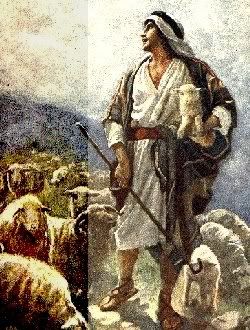 If you haven't read it already, you should read the first post in this series. If you haven't read it already, you should read the first post in this series.
As I mention in the previous post, Rose posted a wonderfully edifying devotional by J. Vernon McGee, on the text of John 10:27-29, and I made some comments in the comment section about how this same text not only preaches eternal security (which was the bread and butter of McGee's devotional), but also teaches what that eternal security rests upon, that being the unconditional election of God.
Some exchange of ideas took place and another commenter suggested that thieves and robbers who come in over the fence represented false religion in general (and that the heart of the metaphor was the centrality of Christ as viewed in appostition to other world religions. This commenter went on to support the position with some verses from scripture that suggested the heart of the comment was that no one was chosen by God, but that we choose God and are saved.When Christ heals the blind man on the Sabbath in John 9, the Pharisees conclude that Christ is "not from God" because Christ did not "keep the Sabbath" (John 9:16). In questioning the blind man they contrast themselves with Christ - they were disciples of Moses and Jesus, because he healed on the Sabbath was obviously a false teacher. They wanted the man who was formerly blind to agree with them that Christ was a false teacher, but the man felt that Christ was no false teacher, but at the very least a prophet, for no one had ever opened the eyes of anyone born blind. When the man refused to agree with their condemnation of Christ they put him out of the synagog.
The description of the good shepherd and the sheep etc. follows this encounter in the narrative, and the figurative language is not arbitrary, but is the very language used in the OT to describe the major OT men who pictured the coming Christ - men like Moses (Ps 77:20) and David (Ps 78:70-72; Ezek 34:23). Using the imagery of the shepherd and the flock Christ demonstrated whom God was endorsing, himself or the Pharisees.
Jesus paints the picture using a scene from everyday first century life in Palestine. Many families owned sheep, but not all families had sheepfolds where the sheep could be penned in for the night. In a village it was common to keep the sheep from many families in the same pen at night. During the night the sheep would mingle and mix, and in the morning the shepherd would come to take his own sheep out of the fold. When the door to the pen is opened the shepherd makes a distinct call, or even blows a special whistle, and his own sheep recognize him and follow him out. The sheep do not follow a shepherd they don't know, so the only sheep who follow the shepherd are his own. Likewise at watering holes and whatnot, flocks were inclined to mingle and mix - but when it was time for one flock to leave, the shepherd would call to his flock, and they would separate themselves from the other sheep and follow him.
It is good to understand that this was common knowledge to the people Christ was addressing - when Christ spoke of His sheep hearing His voice, it was picturing this very phenomenon.
Let's not mix up what is being described here. The call to the sheep is the gospel - and those who respond to it do so because they are God's flock.
In the comment it was said, The reason Jesus knows who His sheep are is because He knows our hearts. It's not because He CHOSE particular people for no reason, but rather He KNOWS and has ALWAYS known who will and will not receive the gospel.
In John 6:44 we read, "No one can come to Me unless the Father who sent Me draws him; and I will raise him up on the last day." (emphasis added).
That is, Christ does indeed call all men to Himself, but no one answers that call ever, unless God the Father (who sent Christ) draws them to Christ.
Note what Christ says in John 10:26 - "But you do not believe because you are not of My sheep."
Whenever we see the word "because" in a simple cause and effect relationship, we do well to examine the effect, and see what causes it. In this case, the effect is that they did not believe. Why didn't they believe? BECAUSE they were not of His sheep. It wasn't that they were not of his sheep because they didn't believe - that is ==NOT== what the text says, it says they did not believe because they were not of His sheep.
In the comment it was said "No one is chosen by God ..."
You may wish to read again the account of Paul's conversion, it describes an encounter between Christianity's greatest enemy (at the time) and Jesus Christ who came to him on the road to Damascus. To deny that God -chose- Paul, strikes me as a little myopic.
The fact is that Hebrew means "chosen ones" - God chose Abraham, He chose Issac (not Ishmael), he chchose Jacob (not Esau) - He chose Moses, chose all the judges in the book of judges, chose David and his family. That claim that God doesn't choose people is just ... just... magnificent. I do hope you will reconsider what you are saying there. It was following this point that Rose identified a key difference in how she and I were understanding the text. She replies:I think we see the call of the shepeherd in this metaphor as a different item. You say it is the call of salvation, but I think it is the call to believers to follow Christ. She then explains herself by way of inferrence about the question she had previously asked me regarding the way in which a shepherd procures sheep - her point being that since the shepherd owned both the sheep that he purchased with money, and the sheep that were procreated in the flock - that the metaphor Christ was using could not be soteriological since it broke down if you extended the metaphor to procreation.
My reply will be in the next post in this series, and is really the heart of it I think.Labels: John, Theology, Unconditional Election |
|
posted by Daniel @
1:09 PM
0 comment(s)
|
|
|
|
| Unconditional Election in John 10 - part 1 |

Rose posted an edifying devotional by J. Vernon McGee, on the text of John 10:27-29 the other day, and I couldn't help but respond to it, for in that passage we not only find eternal security, which Mr. McGee's devotional highlights, but we also find the root cause of eternal security - the unconditional election of every true believer.
To be sure, this isn't the first text one would go to if one wanted to "prove" that the bible teaches the unconditinal election of the individual believer, but nested in the dialog of John 10 we find it, and my first comment drew some attention in that direction:The sheep are already owned by the Shepherd - that is, they don't suddenly become his sheep because they respond to his call - they respond to his call because they are his sheep. It isn't really that subtle, but some miss it anyway and putting the cart before the horse they get confused about what is being taught.
When I responded to the gospel, I was one of those 100 sheep. I didn't become one of those hundred sheep by responding to the gospel - I responded to the gospel because the Lord is my Shepherd - if the Lord were not my shepherd, I would not have responded to His call. It isn't that I became one of his flock when I responded to the gospel, it is that my status as one of his flock became manifest when I responded to His call. The call goes out to all the sheep in the fold, but the ones who reject the gospel demonstrate that they are not of Christ's fold. Rose responded within 10 minutes with the sort of pre-emptive and pregnant question I typically ask intended to draw out an answer that will eventually be used against the argument being made. So I wanted to be careful in how I replied to that. No one likes to knowingly shoot themselves in the foot, even if deep down they know that sometimes it is the best thing for you. Her question was this::How does an earthly shepherd aquire sheep, Daniel, and how does that relate to the parable? Now to me this seemed to be one of those questions that if you answer it directly you affirm the premise - you know, if someone asks you whether you have stopped beating your spouse, any answer which doesn't address and dispel the premise (that you beat your spouse) is an affirmation that you do. So I didn't want to answer the question in a way that would suggest something other than my own understanding of scripture - in this case, I didn't want to answer in a way that suggested that sheep (Christians) became the property of the Shepherd (Christ) through the purchase (atonement), but I wanted my answer to reflect what I believe - that Christ redeemed His own, and that the "purchase" was not an act of aquisition, but rather of redemption as scripture teaches. So my answer, which stood unquestioned for a day at least was as follows:Rose asked, "How does an earthly shepherd aquire sheep?"
An earthly shepherd purchases a flock of sheep with currency.
Rose also asked, "... and how does that relate to the parable?"
We should be careful about mixing metaphors at this point. To be sure, Christ did not "purchase" His flock - He redeemed it. Understanding the difference might help one to understand why the sheep are already the property of the shepherd.
Purchase suggests that one is aquiring something that was never their own, but redeemption suggests that one is paying a debt to retrieve something that one already owns.
Christ is our Redeemer, He paid the "purchase" price to redeem us, but make no mistake - His flock was already His before He ever redeemed it, otherwise it would have been a purchase and not redemption.
And that would have been the end of it, except for one comment that came the following day, the sort of comment which suggested that election was simply divine fortune telling, and that God loves everyone, and that all of us have a real God given, bible recorded opportunity to respond to the gospel.
I will post my reply to that in the next post, and you will see that this is where my take on John 10 comes into play.Labels: John, Theology, Unconditional Election |
|
posted by Daniel @
1:05 PM
2 comment(s)
|
|
|
|
|
|

